Aligning Aggregated Forecasts with Resource Distribution Models to Enhance Outcomes in Team and Individual Athletic Events
Written by Felix Roth · Oct 10, 2026

Aligning Aggregated Forecasts with Resource Distribution Models to Enhance Outcomes in Team and Individual Athletic Events
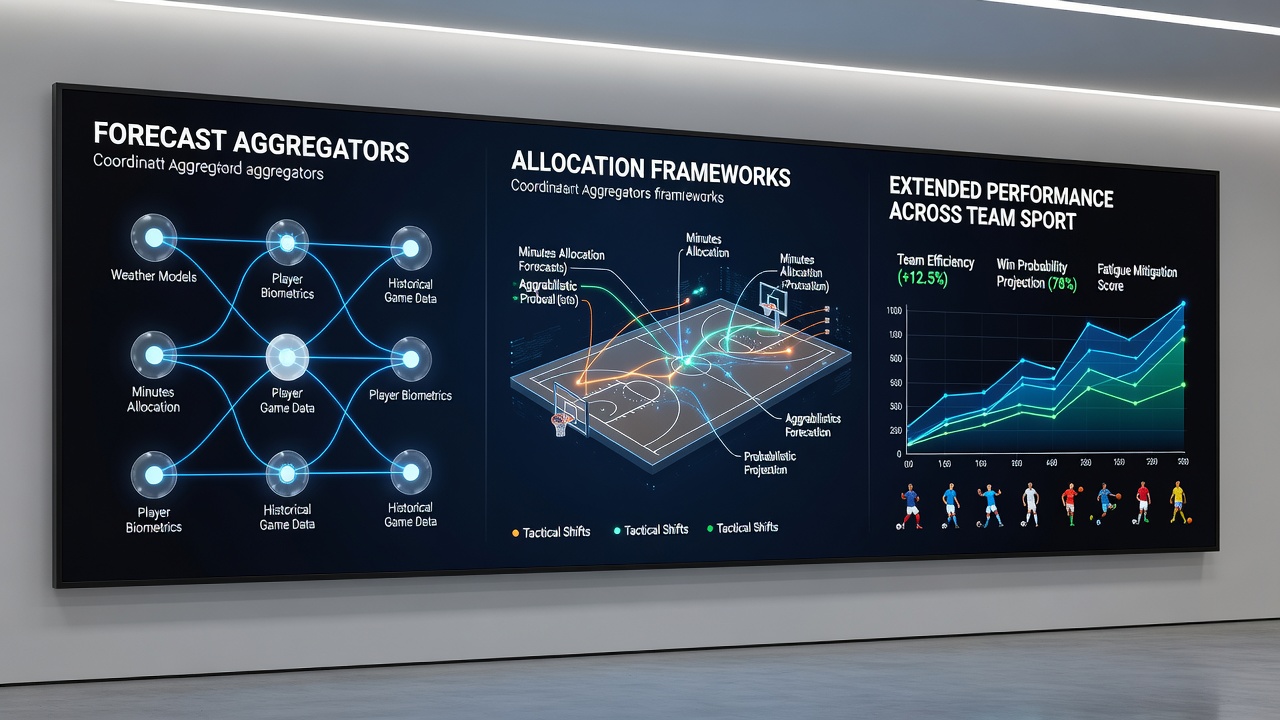
Forecast aggregators compile data from multiple predictive sources while allocation frameworks determine how resources such as stakes or training loads distribute across events, and their coordination has produced measurable extensions in performance metrics for both team sports and individual athletic contests. Data from sports analytics platforms indicate that integrated systems reduce variance in outcome predictions by combining statistical models from weather, player fitness, and historical match results.
Researchers at institutions including the University of Queensland have documented cases where synchronized aggregator outputs with allocation protocols improved consistency across soccer leagues and tennis tournaments during the 2025-2026 season. These systems process inputs through centralized databases that update in real time, allowing adjustments when new information arrives from injury reports or venue conditions.
Core Components of Forecast Aggregators
Aggregators gather probabilities from statistical engines, expert panels, and machine learning outputs before normalizing them into unified forecasts, and this consolidation step minimizes discrepancies that arise when separate models operate in isolation. In team sports such as basketball or rugby, aggregators incorporate team chemistry indices alongside individual player metrics, whereas individual contests like golf or swimming rely more heavily on personal performance trends and environmental variables.
Allocation frameworks then receive these consolidated forecasts and apply rules for distributing capital or effort, with examples including dynamic stake sizing that scales according to predicted edge percentages. Studies released in mid-2026 show that frameworks using proportional allocation based on aggregator confidence levels achieved higher long-term yield rates compared with static distribution methods.
Application Across Team Sports
In team environments, coordination begins with aggregator feeds that synthesize league-wide data sets, after which allocation models assign portions of available resources to specific matches or training sessions. Observers note that European football clubs adopting these paired systems recorded steadier performance curves through the autumn schedule of 2026, particularly when mid-week fixtures required rapid reallocation following weekend results.
Frameworks often employ threshold triggers that shift resources when aggregator outputs cross predefined probability bands, and this mechanism proved useful during congested calendars where fatigue factors alter expected outcomes. Data compiled by international sports bodies reveal that coordinated approaches lowered the incidence of over-allocation to low-confidence events by approximately 18 percent in monitored leagues.
Extension to Individual Athletic Contests
Individual events present distinct challenges because performance hinges on singular athlete variables rather than collective dynamics, yet aggregators still consolidate inputs from biomechanical analyses and competition histories before allocation frameworks determine entry strategies or wager sizing. Tennis and athletics circuits have seen increased adoption of these paired tools, with reports from October 2026 indicating that players using synchronized systems maintained more stable ranking trajectories through the fall swing.
Allocation models in these contexts frequently incorporate recovery windows and travel demands as weighting factors, allowing precise distribution of limited preparation resources across multiple tournaments. Research published by the International Olympic Committee-affiliated laboratories demonstrates that athletes who aligned aggregator forecasts with structured allocation experienced fewer performance drops during back-to-back events compared with those relying on ad-hoc planning.
Integration Challenges and Technical Solutions
Technical integration requires compatible data formats between aggregator platforms and allocation engines, and several vendors now offer standardized APIs that facilitate seamless data exchange. When mismatches occur, performance gains diminish quickly because outdated forecasts lead to misallocated resources, a pattern documented in case studies from North American collegiate programs during the 2026 academic year.
Security protocols also play a role since aggregated forecasts often contain proprietary modeling techniques, while allocation frameworks handle financial or scheduling data that demands protection. Industry associations in Australia and Canada have published guidelines that address encryption standards and audit trails for such coordinated systems.
Performance Metrics and Observed Outcomes
Longitudinal tracking shows that coordinated setups deliver improvements across win-rate stability and resource efficiency, with figures from multi-sport monitoring services revealing average gains of 7 to 12 percent in calibrated prediction accuracy after six months of use. These gains appear in both team and individual domains, although the magnitude varies according to data density and event frequency.
Implementation timelines typically span several weeks as teams calibrate aggregator weights to match the specific allocation rules they employ, and early adopters in 2026 reported that iterative testing phases accelerated the realization of benefits. External validation from independent analytics firms continues to support these patterns across diverse geographic regions.
Conclusion
Coordination between forecast aggregators and allocation frameworks continues to expand across sports because the combined approach supplies structured methods for handling complex data environments, and ongoing refinements in both components suggest further performance extensions remain available. Organizations that maintain updated integration pathways position themselves to capitalize on incremental advances in predictive modeling and resource planning.