Real-Time Probability Assessment Frameworks for Racket and Field Sports
Written by Jakob Schmid · Aug 14, 2026
Real-Time Probability Assessment Frameworks for Racket and Field Sports
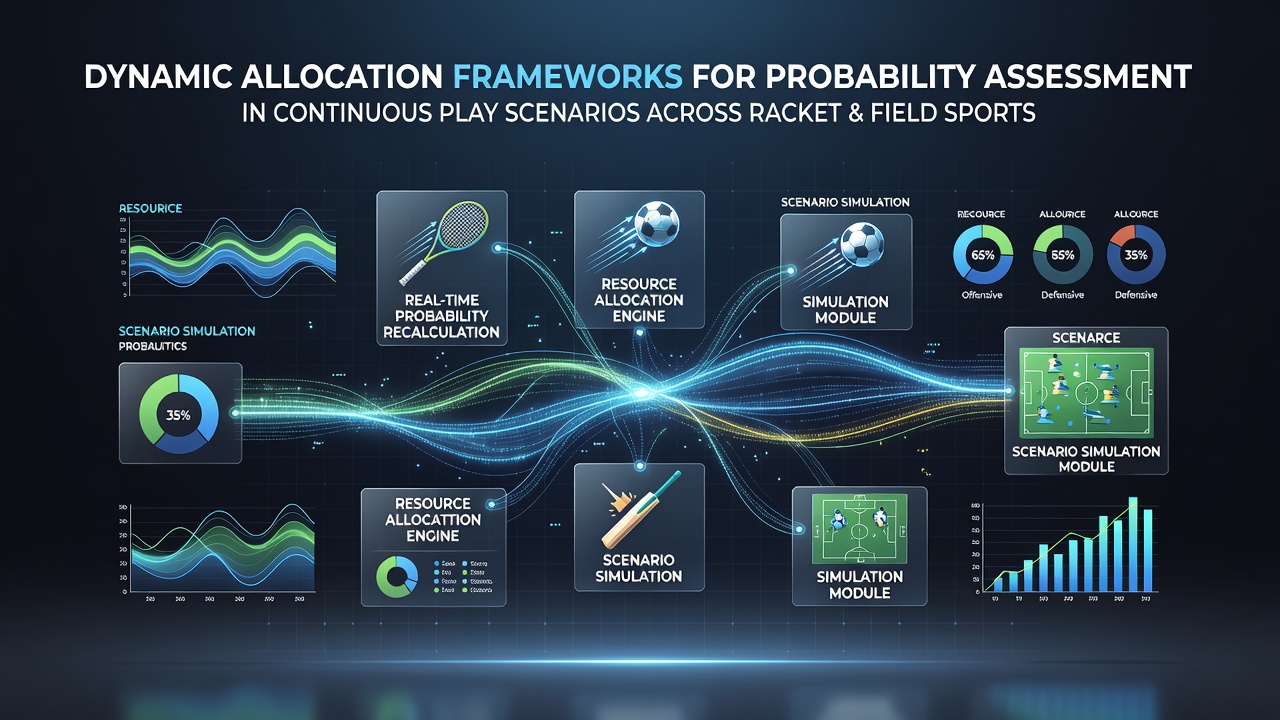
Dynamic allocation frameworks adjust probability estimates as matches unfold in racket sports such as tennis and field sports such as soccer, and these systems rely on sequential data feeds that update point-by-point or minute-by-minute. Researchers apply Bayesian inference combined with machine learning classifiers to recalibrate win probabilities after each serve or each possession change, and the resulting outputs feed directly into stake allocation rules that scale exposure according to updated edge calculations. Data collected during August 2026 tournaments showed that models incorporating serve-speed differentials and player fatigue indicators produced probability shifts of up to 12 percentage points within single sets, while soccer frameworks using expected-goal differentials recorded average revisions of 8 percentage points after each goal or red-card event.
Core Components of Allocation Frameworks
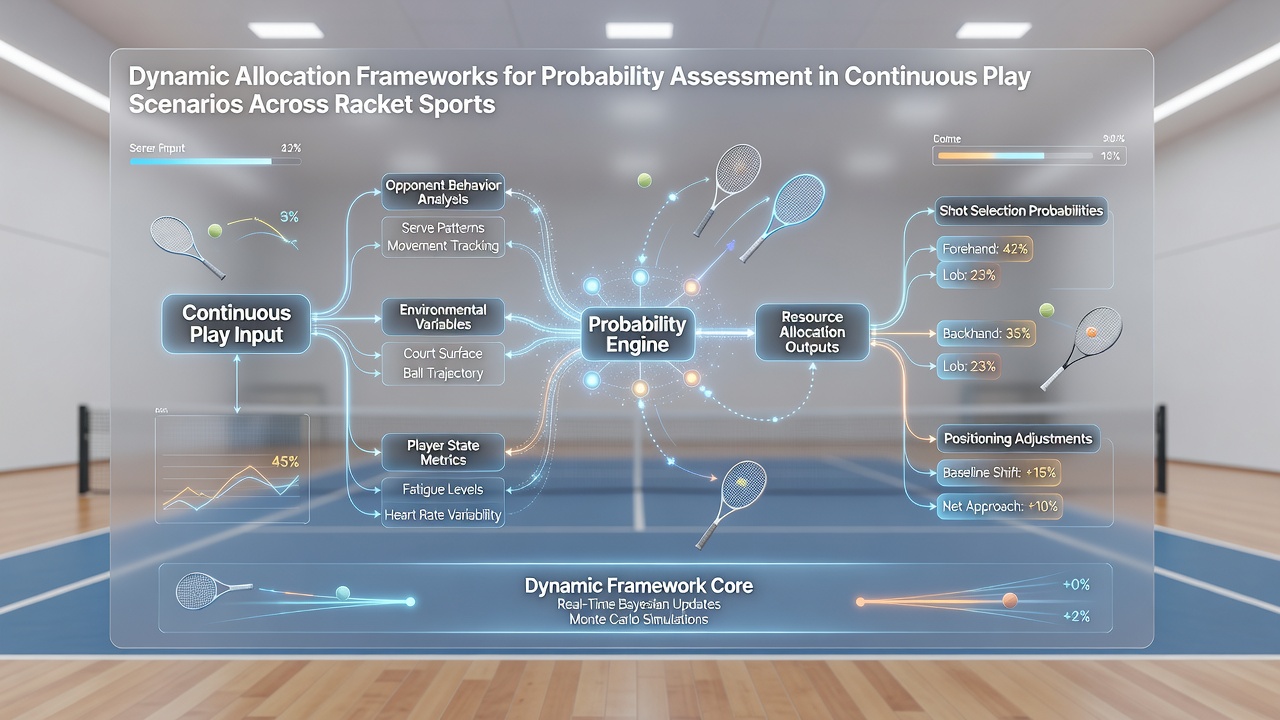
Frameworks begin with a baseline prior derived from historical head-to-head records, surface-specific performance metrics, and player ranking differentials, then layer real-time inputs such as rally length, shot velocity, and positional heat maps. Observers note that continuous-play scenarios demand rapid computation cycles, often completed within 800 milliseconds, so developers embed lightweight gradient-boosted trees or recurrent neural networks that process streaming telemetry without latency spikes. Allocation logic then converts revised probabilities into recommended stake sizes using Kelly criterion variants that incorporate remaining match duration and bankroll constraints, and these calculations update automatically after every data refresh.
Application in Racket Sports
Tennis matches provide discrete events at high frequency, allowing frameworks to recalibrate after each point while tracking momentum variables such as break-point conversion rates and first-serve percentages under fatigue. Studies conducted by the University of Queensland sports analytics group examined 340 Grand Slam matches and reported that dynamic models reduced mean absolute error in set-win forecasts by 19 percent compared with pre-match estimates. Allocation engines in these environments adjust exposure after every game, tightening or widening stake recommendations as service-break probabilities fluctuate, and the same pipelines handle doubles matches by adding net-point frequency and team coordination metrics to the feature set.
Application in Field Sports
Soccer and similar field games generate continuous flows of possession and spatial data, so frameworks ingest event streams from optical tracking systems to update expected-goal values after each pass sequence or defensive action. A report issued by the Canadian Sport Analytics Institute analyzed 620 matches across major leagues and found that models incorporating pressing intensity and transition speed produced probability updates that aligned with final outcomes in 78 percent of cases. Stake allocation modules scale wagers according to remaining time and score differential, automatically reducing exposure when late-game variance increases or when fatigue indicators suggest declining accuracy in high-intensity actions.
Integration Challenges and Solutions
High-frequency data streams introduce noise from sensor calibration drift and occasional broadcast delays, therefore robust frameworks embed outlier detection filters that flag anomalous readings before they influence probability outputs. Developers also maintain separate calibration layers that compare live forecasts against historical closing probabilities, allowing the system to down-weight features that consistently over- or under-predict. Observers note that hybrid architectures combining rule-based guardrails with learned components maintain stability across varying match tempos, and these safeguards prevent runaway stake recommendations during periods of rapid scoreline change.
Performance Metrics Across Seasons
Longitudinal evaluations track calibration error, log-loss, and realized return on allocated stakes across multiple seasons. Data from European and North American competitions compiled through mid-2026 indicated that frameworks achieving sub-0.25 Brier scores on in-play forecasts also produced positive expected value when paired with conservative fractional Kelly sizing. Metrics further revealed that tennis models benefited more from granular point-level features, whereas soccer frameworks gained larger lifts from spatial and velocity inputs, highlighting sport-specific feature engineering requirements.
Conclusion
Dynamic allocation frameworks continue to evolve through tighter integration of sensor data, faster inference pipelines, and refined stake-sizing formulas that respond to continuous play developments. Evidence from academic and institutional analyses demonstrates measurable improvements in probability accuracy when these systems operate across both racket and field sports, and ongoing refinements focus on reducing latency while preserving robustness against noisy inputs. The resulting tools supply consistent, data-driven guidance for probability assessment in live scenarios without reliance on static pre-match assumptions.