The Convergence of Real-Time Odds Tools and Stake Management Systems in Professional Football, Tennis, and Racing
Written by Frankie Ludwig · Aug 19, 2026
The Convergence of Real-Time Odds Tools and Stake Management Systems in Professional Football, Tennis, and Racing
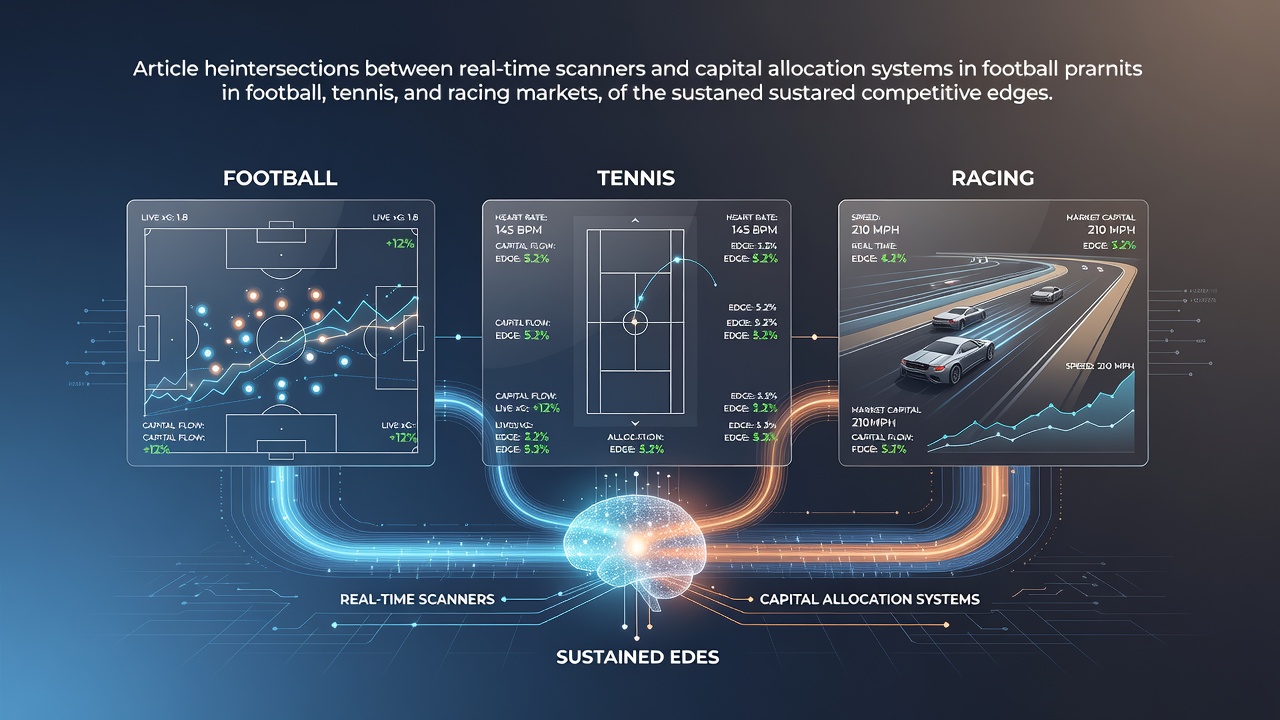
Data from multiple sports analytics providers shows that operators and bettors increasingly combine live scanning platforms with structured capital allocation frameworks to identify and maintain statistical advantages across football, tennis, and racing markets. These systems process incoming odds feeds, historical performance records, and market liquidity signals in continuous loops while simultaneously adjusting position sizes according to predefined risk parameters.
Core Components of Scanner and Allocation Integration
Real-time scanners pull live odds from exchanges and bookmakers, flag deviations from modeled probabilities, and output alerts within seconds of price movements. Capital allocation modules then apply Kelly criterion variants or fractional staking rules to those alerts, scaling exposure based on current bankroll levels and historical edge reliability. Research published in the Journal of Sports Analytics indicates that platforms using both layers simultaneously record higher retention of edge over extended sample periods compared with isolated tools.
Football markets present high-frequency data streams from in-play events such as corner counts and expected goal differentials. Tennis matches generate point-by-point updates that scanners convert into implied probability shifts, while racing markets supply final declarations, track conditions, and pace figures. Allocation engines treat each sport differently, applying tighter variance controls to lower-liquidity racing events and broader exposure bands to major football leagues where market depth absorbs larger stakes without rapid price correction.
Implementation Patterns Observed in August 2026
By August 2026 several commercial platforms had released updated APIs that allow direct handoff between scanner outputs and allocation logic. One documented workflow routes scanner-flagged tennis matches into a dynamic stake calculator that recalibrates position size after every set based on updated serve percentage models. In racing, scanners monitoring tote and fixed-odds movements feed into allocation rules that cap single-race exposure at a fixed percentage of total funds, automatically reducing size when multiple qualifying races occur on the same card.
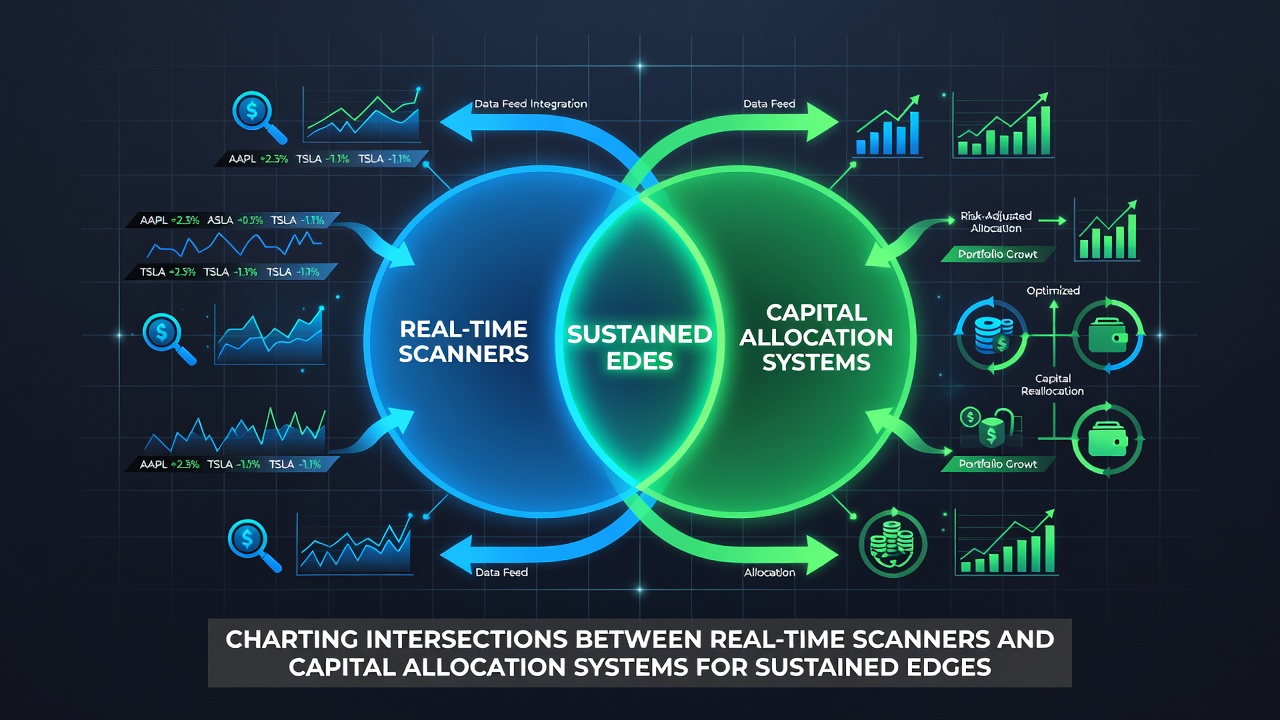
Industry reports from the European Gaming and Betting Association note that firms adopting these integrated setups report measurable reductions in drawdown duration during volatile periods. The same reports highlight that allocation systems prevent over-commitment when scanners generate clusters of signals within short time windows, a common occurrence during simultaneous football fixtures or overlapping tennis tournaments.
Performance Metrics Across Market Types
Longitudinal studies covering 2024 through mid-2026 show that integrated systems maintain positive expected value in football markets when scanner accuracy exceeds 62 percent and allocation rules enforce maximum single-bet fractions below 3 percent of bankroll. Tennis edges appear more sensitive to allocation discipline because match lengths vary widely, creating uneven opportunity sets. Racing markets demonstrate the strongest response to real-time liquidity scanning, since tote dividends and exchange prices can shift materially between final declarations and race start.
Observers tracking professional syndicates note that many now maintain separate allocation tiers for each sport, with football receiving the largest average stake bands due to higher liquidity and tennis receiving tighter controls during best-of-five set formats where variance spikes in later sets.
Technical Considerations for Sustained Operation
Successful deployments require low-latency data pipelines that feed scanner outputs directly into allocation engines without manual intervention. Database schemas typically store scanner-derived probabilities alongside realized outcomes, enabling periodic recalibration of allocation multipliers. When models detect degradation in edge persistence, allocation rules automatically tighten exposure across the affected sport until fresh data restores confidence levels.
Those who have examined production environments report that fallback mechanisms become essential during data outages or exchange maintenance windows. Allocation systems default to conservative flat stakes or pause entirely until scanner feeds resume and model integrity checks pass.
Conclusion
Integration of real-time scanners with capital allocation systems continues to evolve through iterative refinement of data handoff protocols and risk parameters. Available performance records indicate that consistent application across football, tennis, and racing markets supports longer-term edge retention when both components operate within clearly defined statistical boundaries. Further developments in API connectivity and model updating cycles are expected to shape operational standards through the remainder of 2026 and beyond.